
The SMB Owner’s Guide to the SEO + AI Health Check: Protect Your Traffic from Google’s New Generative Search

Imagine Google is giving people a summary of the answer right at the top of the search page. That’s what its new AI feature, the Search Generative Experience (SGE), is doing. This means fewer people are clicking through to websites. For small and mid-sized businesses, sticking to old keyword-stuffing SEO methods is a fast way to lose organic traffic. To protect your leads and stay ahead, you need a new SEO strategy for AI search.
This guide gives you a simple, step-by-step plan to perform a crucial SEO + AI Health Check on your website. You will learn to spot the mistakes AI hates, understand what Google truly values now, and make simple, actionable fixes to future-proof your business online.
Understanding the AI Shift
The way Google finds and presents information has fundamentally changed. Generative AI is no longer predicting which links are best; it is synthesizing answers directly. To adapt your content strategy, you must first understand the core differences between the old, keyword-focused search engine and the new, conversational AI-driven experience.
The New Rules: From Simple Keywords to Real Answers
Traditional SEO was about repeating the same exact words many times. Today, Google’s AI (like Gemini and its cousins) is smarter. It understands the full context of a question, not just a few keywords. This means your content must be deep, helpful, and trustworthy to matter.
The Rise of Generative AI and Zero-Click Answers
Google has deeply integrated its Gemini (formerly Bard) AI into SGE, while Bing utilizes similar features. These tools create rapid, synthesized answers by drawing on information from multiple sources. If your content isn’t authoritative or comprehensive enough to be included in these AI overviews, you miss the opportunity for valuable brand exposure.
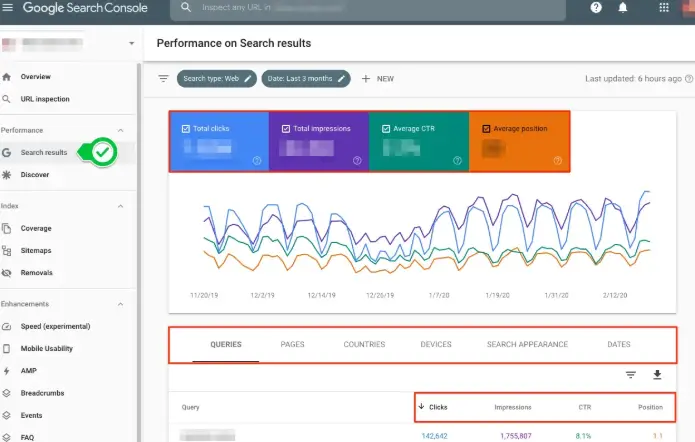
- Actionable Tip: Track your site’s performance in these new results using Google Search Console (Free). Look at the impressions and click-through rates (CTR) for queries that trigger an SGE summary.
- Fact: Many industry analysts project that conversational and voice search will soon account for over 50% of all search queries.
The Rise of Zero-Click Answers
Google’s AI generates a quick, summarized answer right at the top of the search results (called the AI Overview or SGE). If your content isn’t seen as one of the best sources, you miss the chance to be featured, and the user never has to visit your site.
- Actionable Tip: Use the free tool Google Search Console to see what people are searching for when they see your result. Pay attention to queries that show the AI Summary—if your clicks are low, you know you have work to do.
- Quick Fact: Experts believe that soon, more than half of all searches will be conversational questions or voice commands.
Why Old SEO Metrics Are Failing?
The new standard for visibility is a simple idea that Google calls E-E-A-T (Experience, Expertise, Authoritativeness, and Trustworthiness). Google’s recent updates heavily favor content that shows real-world experience and clear expertise. Content written just to sell or just to stuff keywords is being ignored by the
The Integrated SEO + AI Health Check
This quick check combines technical basics with the new requirements of AI-driven search.
Step 1: Check Your Site’s Foundation (The Technical Basics)
Start with a deep technical crawl to establish your site’s foundation.
- Tools: Use Screaming Frog (Free up to 500 URLs) to quickly identify broken links, crawl errors, and URL issues. Analyze your site’s technical health using SEMrush’s Site Audit tool (Powerful free tier available) to check for core structural and on-page problems. You can also use the Google Search Console to ensure every page you want to rank is “Indexed.”
- Focus: Your website must be secure (HTTPS) and easy for Google’s robots to crawl and understand.

Step 2: Check Your Content for AI-Friendliness (The E-E-A-T Test)
Problem 1: Thin or Fluffy Content. AI immediately ignores content that repeats keywords or doesn’t fully answer the user’s question.
- Fix: Ensure your content is simple and clear. Use the readability checker in a tool like Yoast SEO (Free plugin for WordPress) to aim for an easy-to-read, clear structure. Your page needs to fully solve the customer’s problem.
Problem 2: Misunderstanding the Customer. If your page is titled “General Home Tips” but the user is typing “How to Fix a Leaky Faucet,” the AI will skip you because your title doesn’t match their intent.
Fix: Make your headings (H2s, H3s) very specific. Use things like bulleted lists and Q&A sections (called Schema Markup) to tell the AI exactly what questions your page answers.

Step 3: Check for Speed and Mobile Experience
Slow websites and poor mobile performance are instant ranking penalties because AI prioritizes a great user experience.
- Problem: Slow loading speed (called Core Web Vitals or CWV). Google requires sites to be fast, stable, and responsive. Pages that fail this test will see a big drop in rankings.
- Quick Fact: Businesses that fix their site speed often see a 20-25% jump in organic traffic.
- Tool & Fix: Use Google PageSpeed Insights (a free tool) to get a direct report. Your #1 Priority is making your site mobile-first and getting the main content to load in under 2.5 seconds.
Step 4: Check Your Trust Signals (Backlinks and Authority)
Fake authority (like buying links) is now easy for AI to detect and results in severe penalties.
- Problem: Spammy Links. AI is excellent at spotting fake or low-quality links that try to artificially boost your site’s authority.
- Tools & Fix: Use a tool like Majestic or Google Search Console to look at who is linking to you. If you find toxic links, use Google’s Disavow Tool immediately. Build authority the right way: by creating original research or expert guides that naturally earn links from high-quality, reputable industry sites.
Conclusion: Future-Proofing Your Content for AI Success
SEO hasn’t died—it has simply focused on quality. The SEO + AI Health Check is your new roadmap. Ditch the old keyword tricks, focus on demonstrating real-world E-E-A-T, and ensure your site is technically sound.
Key Takeaways for Sustainable Growth:
- Focus on Questions: Use free tools like AnswerThePublic to find the exact questions your customers are asking, and structure your content to answer them completely.
- Speed Matters Most: Fix your Core Web Vitals (CWV) right away. Slow sites won’t rank.
- Build Real Trust: Your content must show clear Experience and Expertise. Back up claims with facts, original data, and verified sources.
Frequently Asked Questions (FAQ) About SEO in the AI Era
What is Google SGE, and how does it impact my website’s organic traffic?
Google SGE (Search Generative Experience) is an AI feature that gives summarized answers at the top of the search page. This causes a potential traffic drop because users get their answer without clicking your site. To succeed, your page must be authoritative enough to be featured in the AI summary or offer content that goes deeper than the summary.
What is E-E-A-T, and why is it the most critical ranking factor now?
E-E-A-T stands for Experience, Expertise, Authoritativeness, and Trustworthiness. It is critical because AI models are trained to prioritize information from reputable sources with real-world experience..
Are there any free AI-focused SEO tools I can use right now?
Yes. You can use Google Search Console to track how your pages appear in the new AI features. Google Lighthouse (Free), built into Chrome, provides a detailed report on your Core Web Vitals, which is a key technical signal for AI search engines. Additionally, tools like AnswerThePublic (limited free use) can help you find conversational, question-based keywords.
How should I update my old content that was optimized with keyword stuffing?
You must completely rewrite it. Stop trying to hit a keyword count. Instead, use natural language and synonyms, answer related questions clearly, and integrate original data or expert quotes to build E-E-A-T. Use a readability tool like Yoast SEO to ensure it flows naturally
What is the single most important technical factor?
The single most important technical factor is site speed and stability, measured by Core Web Vitals (CWV).The critical metric is Largest Contentful Paint (LCP). This simply measures how long it takes for the biggest and most important part of your page (like your main headline or image) to load.If your LCP is over 2.5 seconds, fixing this is your top priority. Google’s AI prefers fast, stable sites because they give users a better experience.